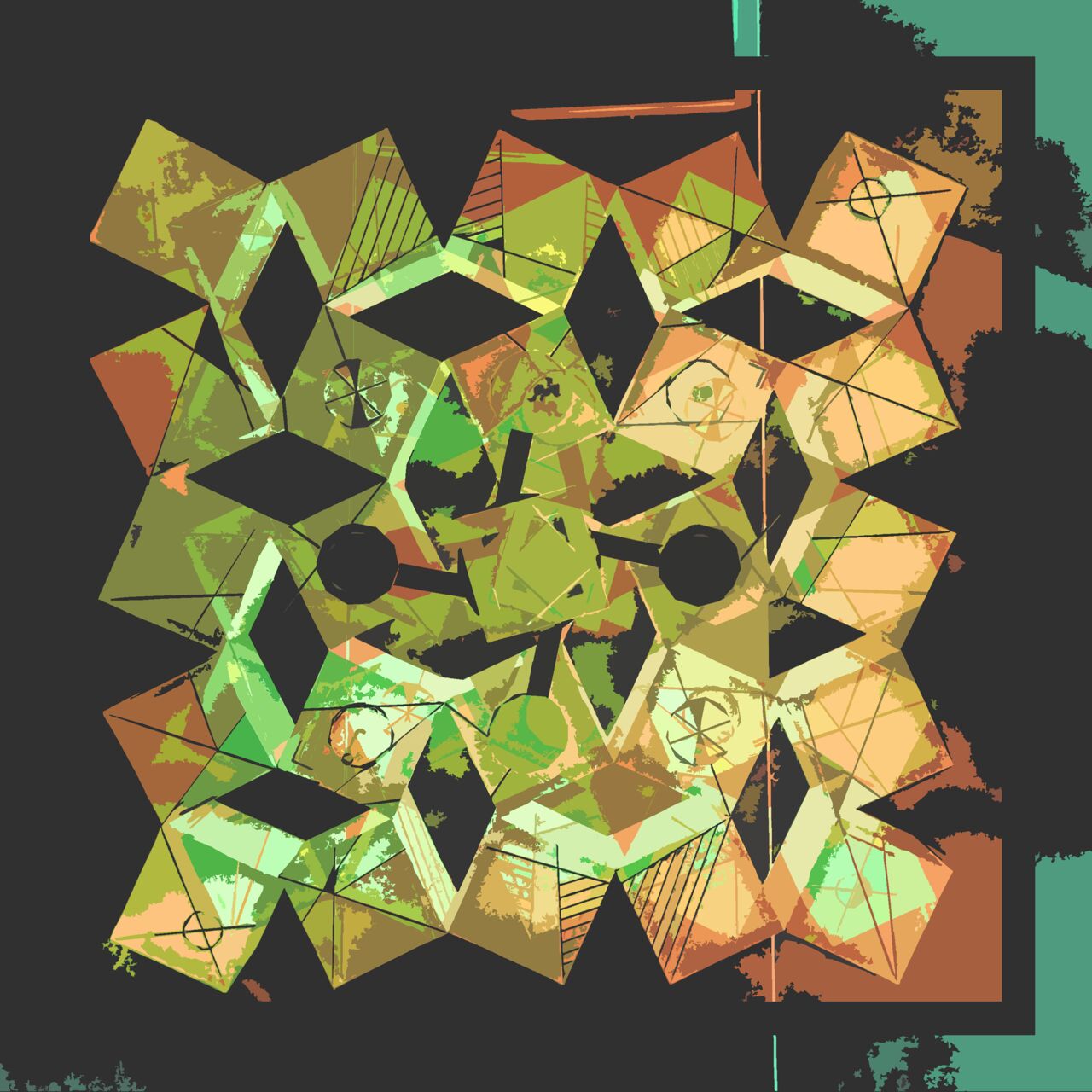
This project explores the translation of origami principles into rigid, three-dimensional structures. I’ve always been interested in how folding patterns can extend beyond paper into thicker materials and modular geometric systems.
The goal was to create an interactive public art installation composed of multiple connected cubes that could expand, contract and rotate as a unified form. Rather than relying on traditional two-handed interaction—pulling opposite ends apart—I wanted to design a system that could be activated with a single point of control, ideally from the center.
I began by simulating the structure digitally in Adobe Animate, creating a grid of 25 squares and animating movement from the center outward. This helped me visualize how a single point of input might affect the entire system.
Note: The animation below reflects later design elements, including the gold lines and circles.
A key question emerged early on: would rotating the center cube be enough to drive movement throughout the structure?
To test this, I built a small prototype of five cubes. Rotating the center caused the entire structure to spin as a whole, rather than creating a cascading motion. Despite this, I moved forward with a full-scale build to better understand how the system would behave in practice.
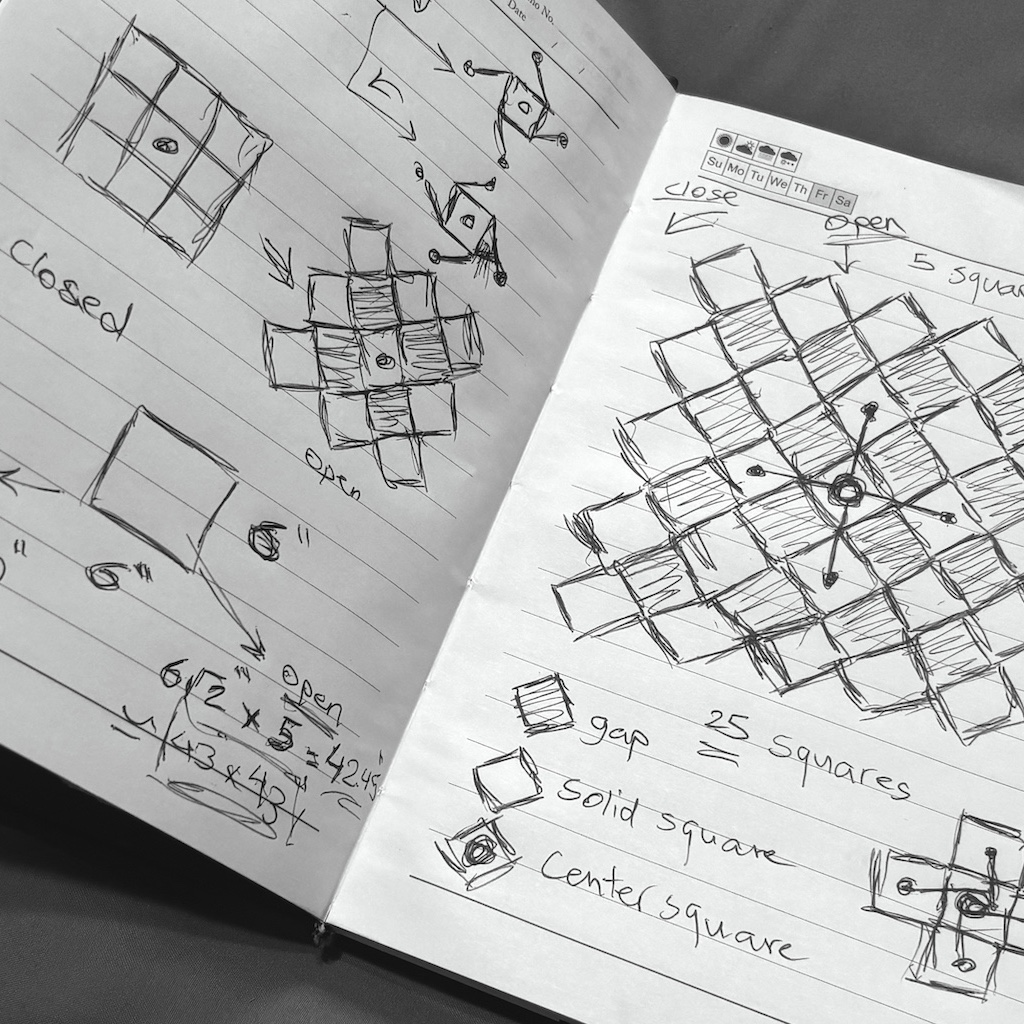
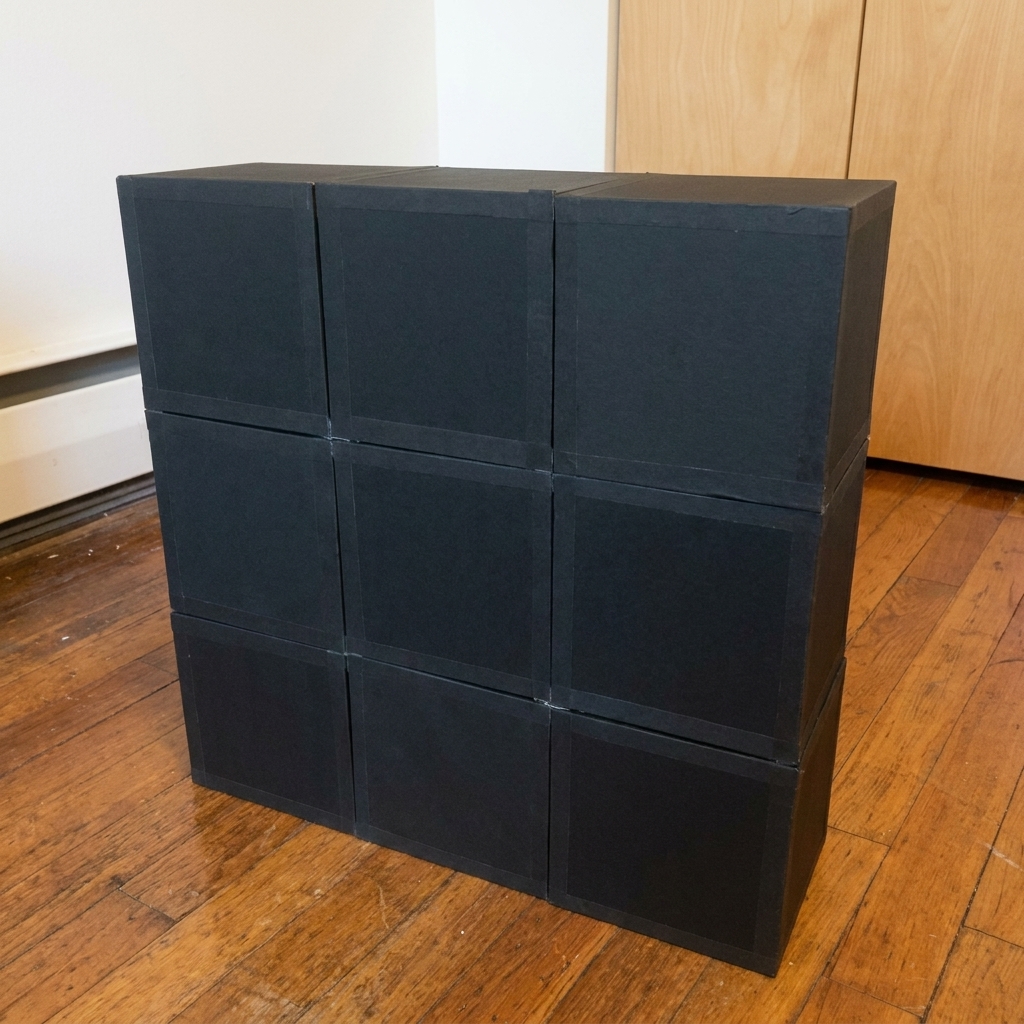
The final structure consisted of 25 cubes (150 panels), made from 6-inch mat board squares. Each cube was assembled with gaffer tape hinges and connected edge-to-edge to form a continuous, flexible system.
After assembling the full structure, two major challenges became apparent:
The structure was heavier than expected, making it difficult to manipulate freely.
The center cube alone could not effectively drive movement across the system.
To address this, I introduced a secondary mechanical system: four wooden linkages connecting the center cube to its neighbors, along with a dowel handle to introduce motion from a single point. After testing different placements, mounting the handle not to the center cube but to an adjacent one allowed the handle to move in a linear motion, causing the center cube to rotate and the motion to propagate more smoothly through the structure.
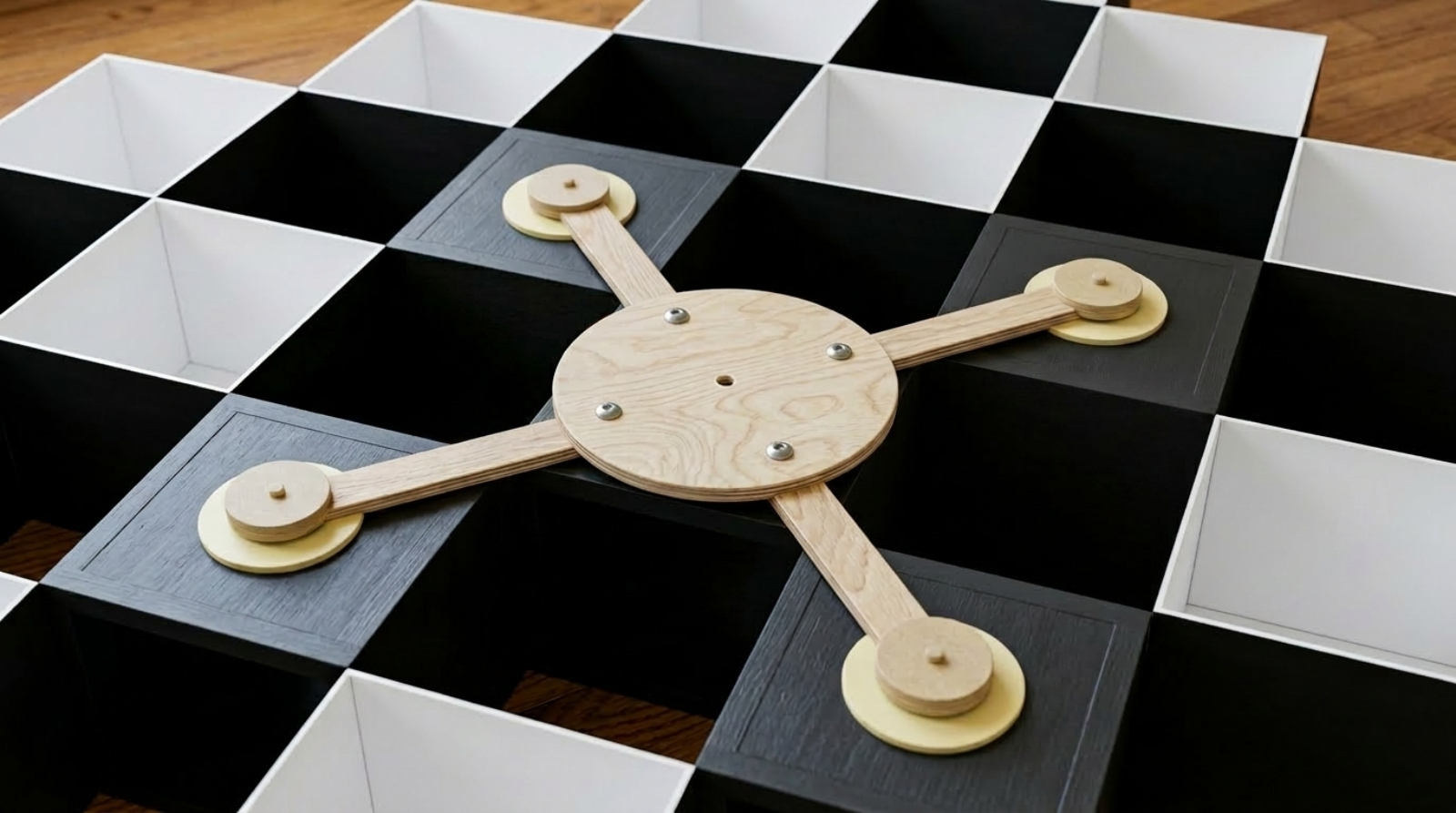
I also modified the center cube to support a wall-mounted rod system, allowing the piece to hang while remaining interactive.
I added a final layer of gold linework and circular patterns across the surfaces to unify the form visually.
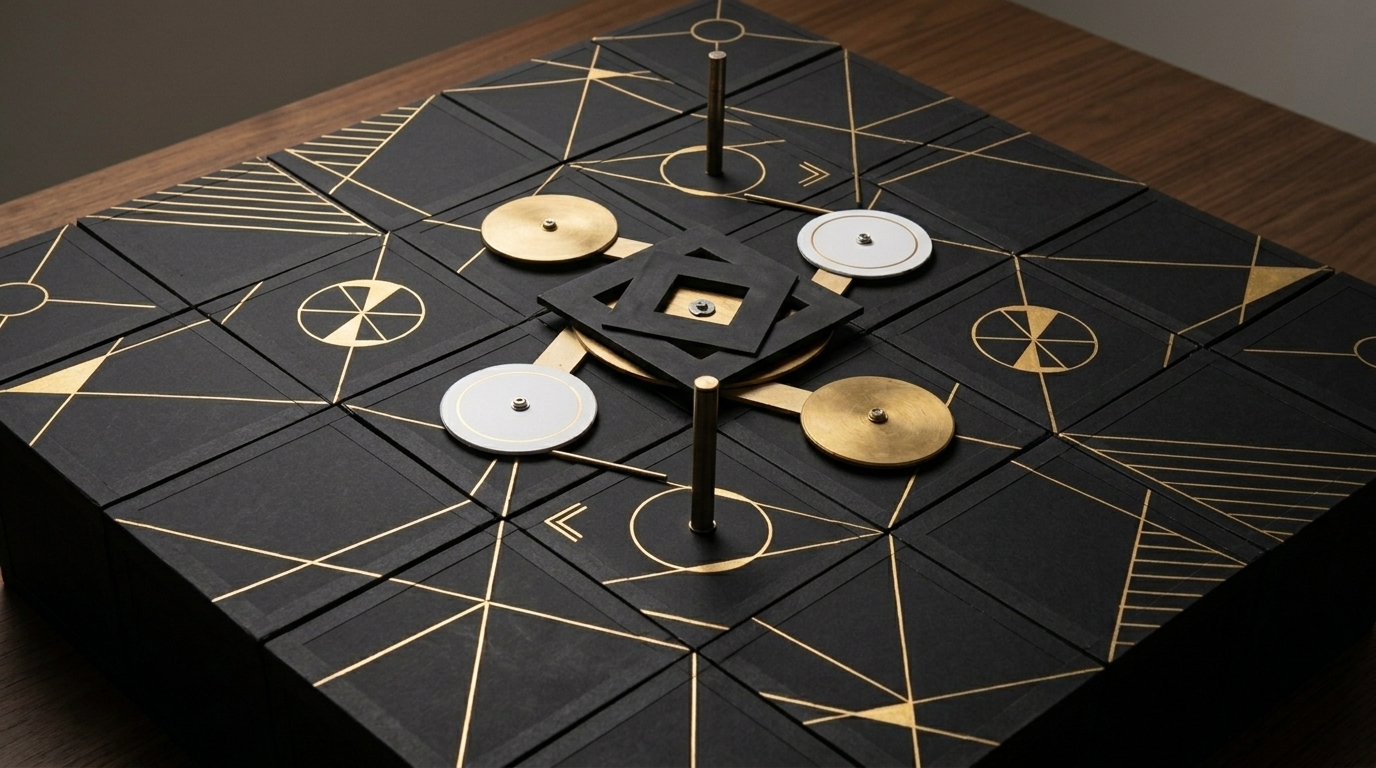
The final installation functions as a suspended, interactive structure that can be manipulated from a central point. While the original goal of fully propagating motion through simple hinged connections proved mechanically complex, the addition of linkages and a handle allowed for a more controlled and responsive system.
The project highlights the tension between origami-inspired movement and the physical constraints of rigid materials, offering insight into how structural systems can be adapted, reinforced and reimagined to achieve dynamic behavior at scale.
This video of the finished installation demonstrates the movement and interaction of the piece once mounted: